How to Write a Family History
Have you ever wanted to write a family history? Not sure how to actually go about doing it? Look no further! I’ve gone to the trouble of figuring out all the details so you don’t have to.
Background
I recently completed something I’d been thinking about and working on for five years—a family history book. In it, I document and describe my family on both parents’ sides, beginning with my grandparents and looking back two additional generations. I put together family trees, all the documentary sources I could, and wrote individual biographies for more than thirty of my ancestors. Some of the bios are only a few lines long, and some are as long as eight pages. After researching and writing the text, I designed the final product, a 140-page hardcover book, and printed thirty-five copies to give to family and friends.
This is what the final product looks like:
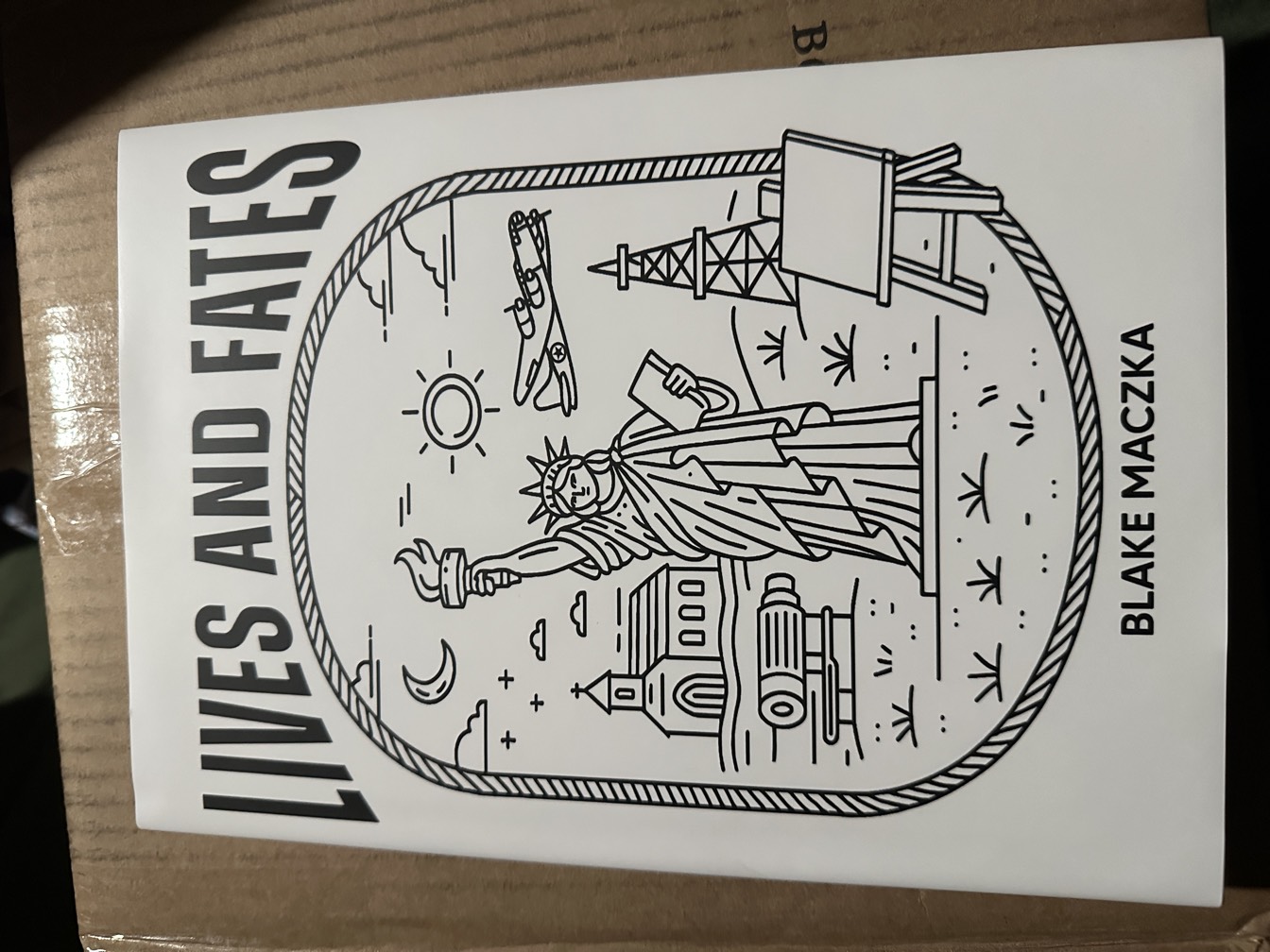
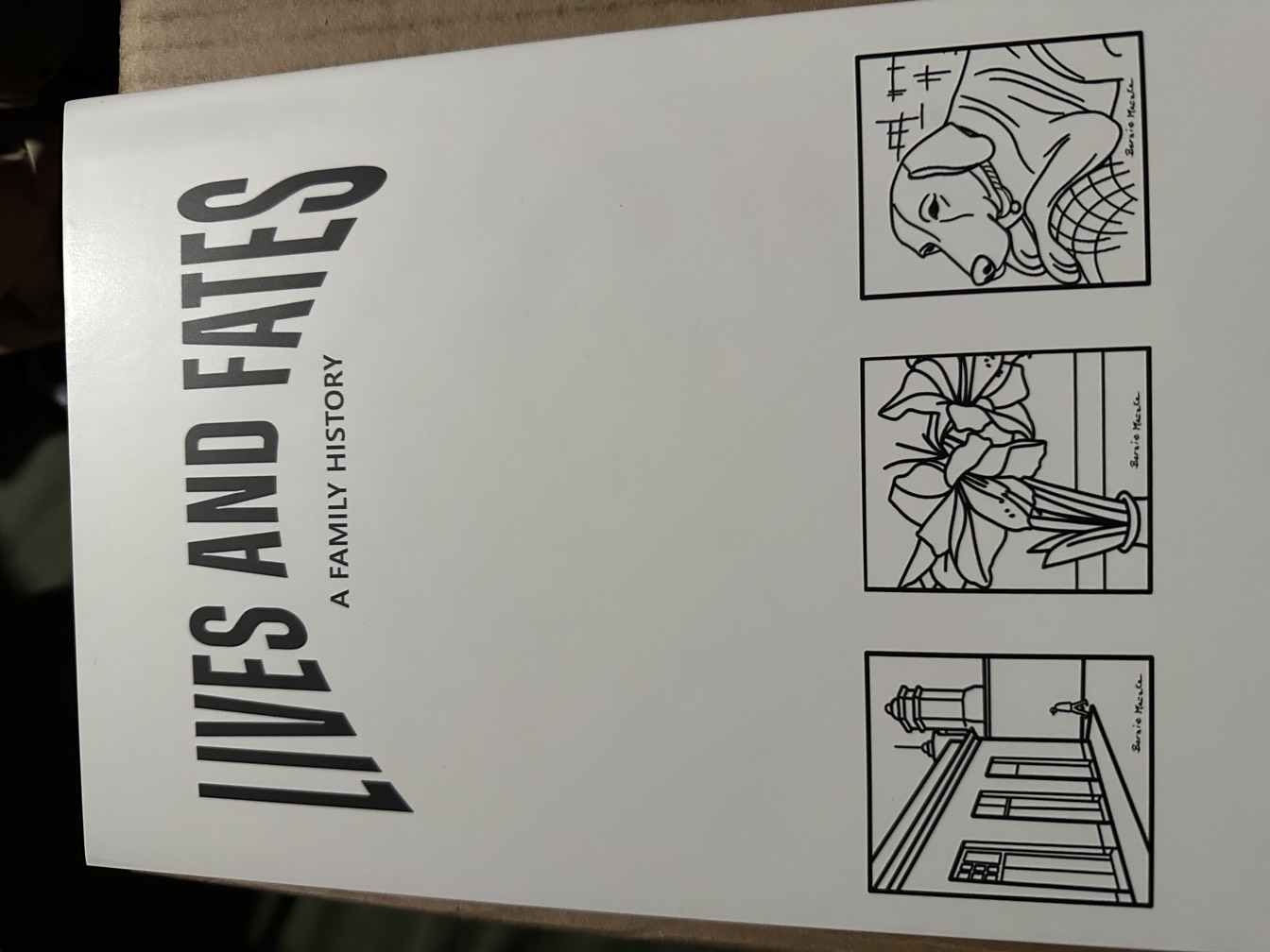
Objective
I’ve put together this guide as an aide in writing your own work of family history. Even if you don’t end up writing a full-blown book version, pieces of this guide will be applicable to anyone with an interest in learning their own family’s history.
My Process
Step 0: Research
I began by interviewing my grandparents. I called them with a list of questions and asked them about their lives, then asked them what they know of their parents’ lives, then their grandparents’. We started with the basics—where everyone lived, what they did for work, what their dispositions were. Over about a dozen sessions I wrote down every detail and every story that could be remembered, and kept asking until the stories were being repeated for the third time. That was my starting point.
From there I expanded my search by combing through the piles of documents my grandfathers generously handed over to me, as well as any related documents I could find myself via ancestry.com or other online or print sources. I read several excellent books, including a two-volume history of Poland, and numerous military histories from both the Pacific and European theaters of World War II. I also had a few written records of the family history from prior generations that proved invaluable. In particular, my great-grandfather wrote a ~200 page memoir that filled in the history of much of his side of the family.
This process went on and off from 2021–2025, with significant lulls when I attended grad school and at various other times when life got in the way. The output of this process was a few hundred pages worth of typed notes that I used as my starting point for the next step.
Step 1: Writing
Once I felt like I had the story down, I set to forming it into a cohesive narrative. I set up scaffolding: I would begin with my dad’s side, then move on to my mom’s. For each side, I provide an introduction and then move generation by generation with biographies and general sections on topics like World War II and Life in the Deep South.
I combed through my notes and put together the best story I could tell of each member of the family. In particular for the furthest generation back, this revealed how little I knew of them—in many cases almost nothing beyond their name, when they died, and who they married. I went back to research and tried to gather as much information as I could. I also re-combed through key sources to see what I could find.
Step 2: Design
Once I had a text that felt mostly finished, I started designing an actual document I could give to a printing house to print. I had no experience with this, and after a bit of research landed on Adobe InDesign for this task. I watched a few videos on the basics and started putting together the document. While slow and often frustrating, this was tractable and I muddled my way through enough to make the pages look the way I wanted to.
What did not seem tractable was designing the cover art. For this task I landed on a design contest via 99designs.com. The idea is simple—you offer a fixed sum upfront along with a brief, and then anyone can submit as many entries as they want, and then you select a winner who you work with to get your finished product. I found this to be a great way to get a lot of ideas generated, and my contest had well over 100 submissions, including my final design.
With my final design in hand, I was ready to send this off to get printed.
Step 3: Printing
With the help of ChatGPT and Google I researched printmakers who would do runs as small as 20–50 copies. I ended up using Bookmobile, an independent bookmaker and printing service based in Minnesota. When I had the files finalized, they printed and shipped me a proof copy. I made a number of edits to the text and cover design, and then sent the revised files off for the print run.
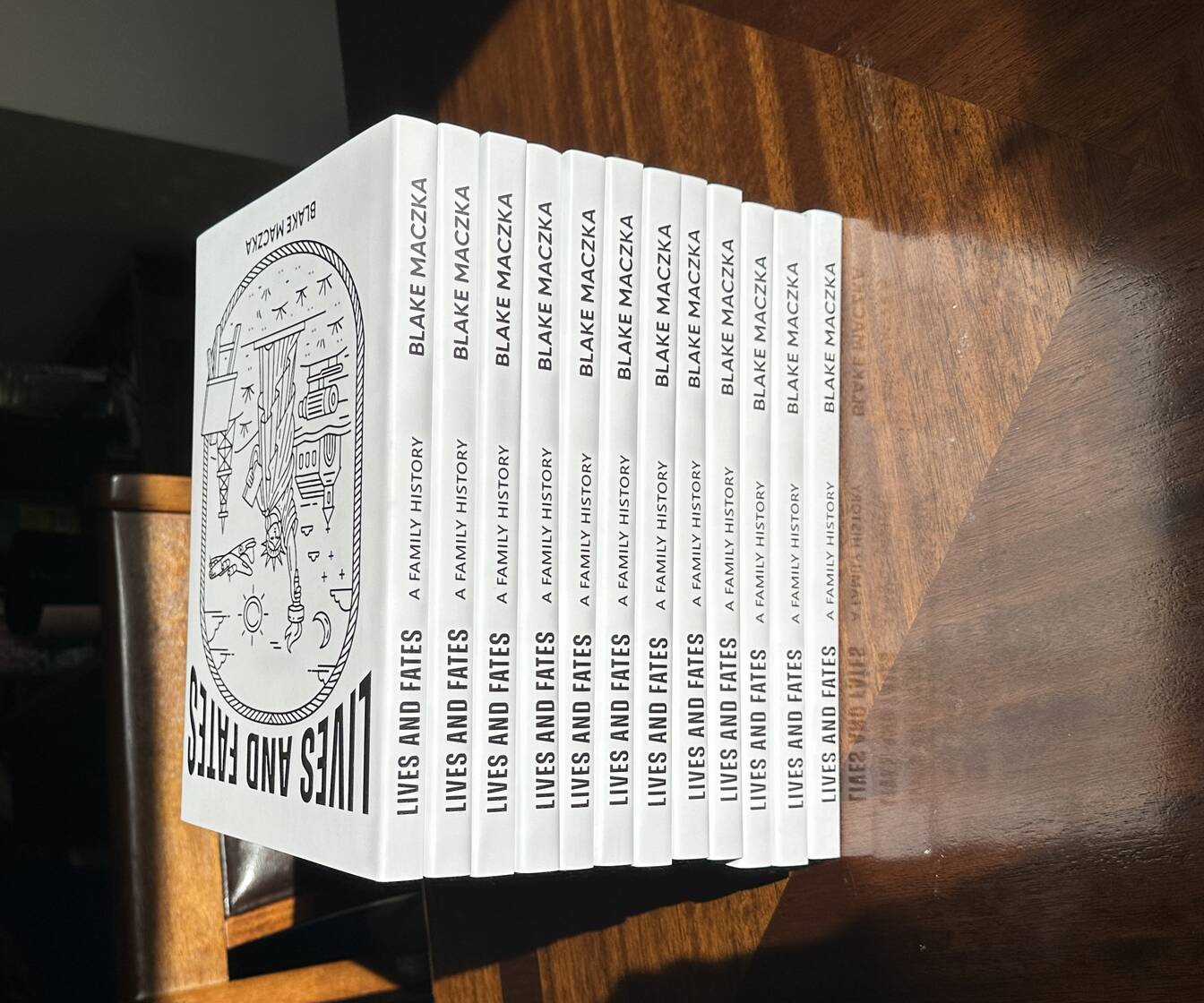
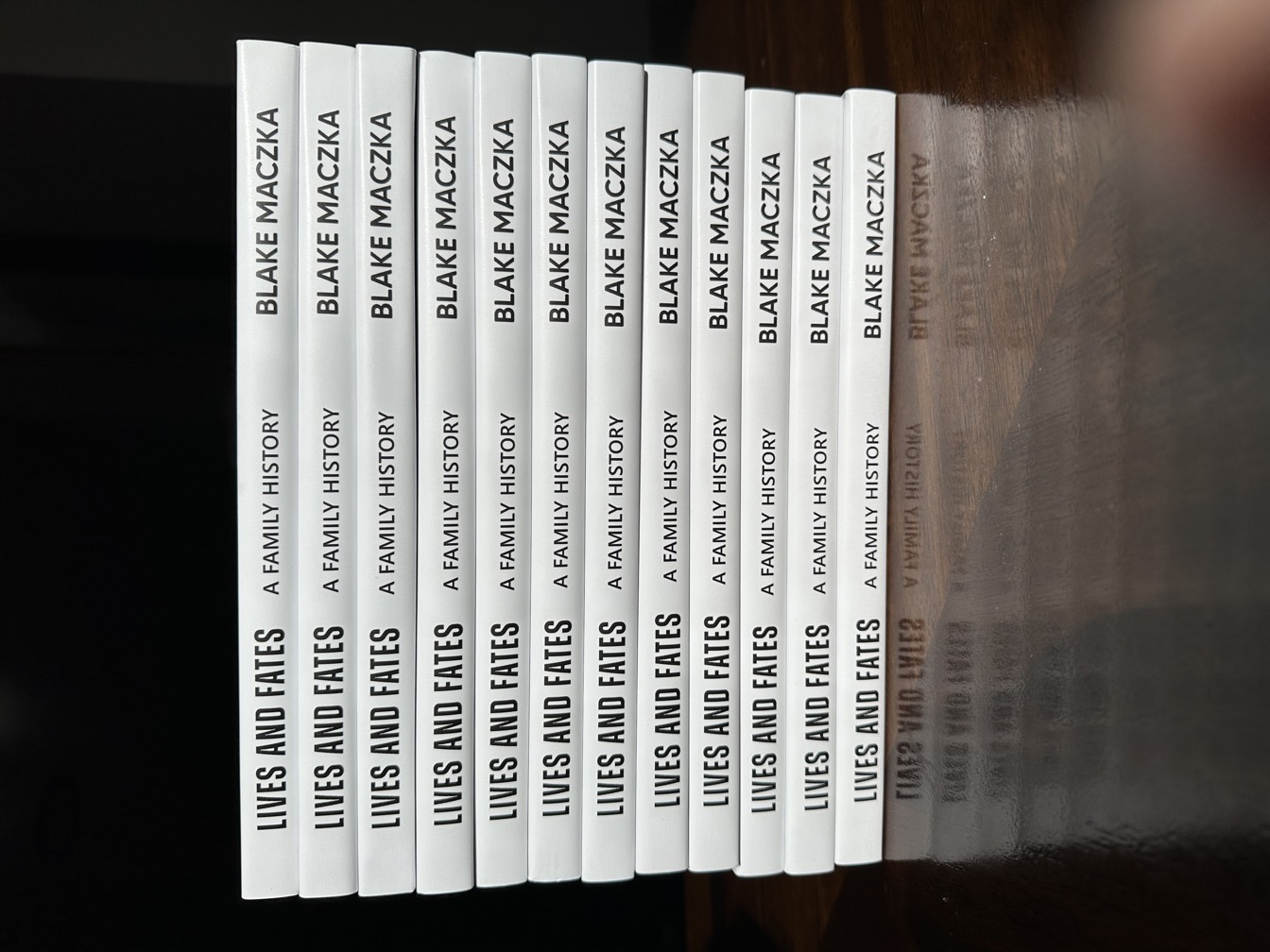
Timeline
2021 — I decide to start writing a family history to preserve what I can of my family’s history
2021–2024 — I do research and primary interviews
January 2025 — With some time off between jobs, I turn my focus to the project, complete the bulk of the remaining research, and begin writing the text
February–July 2025 — I write and do the initial design of the document
July–September 2025 — I finish designing the work, commission a cover, and send it off for a proof copy
September–October 2025 — I get the proof copy back, make edits, and send off the finalized files for printing
November 2025 — The finalized and printed copies are delivered to my apartment in Brooklyn
Costs
| Item | Cost |
|---|---|
| Printing (proof copy + 35 final copies + shipping) | $2,429.05 |
| ancestry.com membership (8 months) | $217.60 |
| InDesign membership (4 months) | $146.24 |
| English criminal records researcher | $186.05 |
| Research books | $166.04 |
| Design contest + revision | $375.00 |
| Total | $3,519.98 |
Recommendations
-
Start with what, and who, you already know. Whether it’s your parents, grandparents, or another family member, start by talking to your elders. Learn what you can from them, verify what you can, and take advantage of any prior work that’s been done to learn or record your family history.
-
Define your scope. Maybe you want to write down your grandparents’ stories, or maybe you want to look back further. Whatever you want to do, it helps to set a defined period that you aim to record. History is never a finished product, but it helps to at least limit yourself to a certain number of years or generations.
-
Give yourself a deadline. At the start of 2025 I decided to give myself a deadline of completing this project in time to give it to family for Christmas that year. Having this date to back into forced me to prioritize the project and figure out the remaining pieces to get it across the finish line.